Suva
Fiji
--:--
Fiji 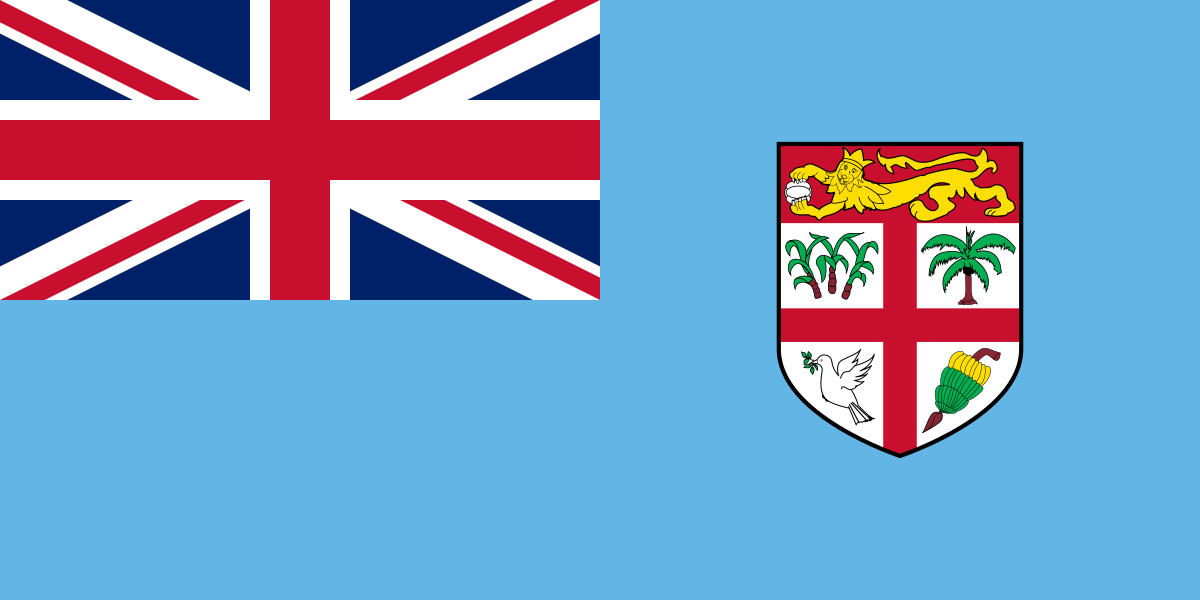
Fiji's position just west of the International Date Line led it to be among the first nations to celebrate the new millennium on January 1, 2000, with fireworks in Suva lighting up the sky at 10 a.m. local time—nine hours before London's festivities. This "first to the future" status has become a point of national pride, often highlighted in tourism promotions tied to the country's forward-leaning time zone.
Nestled in the heart of Oceania, Fiji is a tropical paradise comprising over 300 islands, with a population of around 900,000 and the vibrant capital of Suva serving as its administrative hub. This island nation, officially known by the ISO code FJ, operates on a single time zone that keeps its laid-back lifestyle in sync with the Pacific rhythm. Whether you're planning a vacation to Fiji's pristine beaches or coordinating business across the international date line, understanding the local time is key to making the most of your connection to this South Pacific gem.
Fiji maintains a straightforward approach to timekeeping with just one time zone across its archipelago, making it easy for travelers and locals alike to stay on the same clock. The primary IANA time zone for Fiji is Pacific/Fiji, which observes a fixed UTC offset of +12 hours year-round. This means that when it's noon in Coordinated Universal Time (UTC), it's already 12 a.m. the next day in Fiji—a full 12 hours ahead, positioning the nation as one of the earliest to greet each new day in the Pacific region. Suva, the bustling capital on Viti Levu island, follows this exact zone, ensuring seamless coordination for government offices, markets, and international flights at Nadi International Airport.
Unlike many countries that adjust clocks seasonally, Fiji does not observe daylight saving time (DST), a policy in place since 2009 when the nation abolished it to avoid disruptions in its tourism-driven economy and agricultural cycles. There are no switchover dates to worry about; the UTC+12 offset remains constant, providing predictability for global interactions. This stability is particularly beneficial for Fiji's close ties with Australia and New Zealand, where DST variations can complicate scheduling.
For those connecting from Europe, the time difference with London highlights Fiji's forward position. In London's winter months (when the UK is on Greenwich Mean Time, UTC+0), Fiji is 12 hours ahead—meaning 9 a.m. in Suva corresponds to 9 p.m. the previous day in London. During the UK's summer (British Summer Time, UTC+1 from late March to late October), the gap narrows to 11 hours, so a midday meeting in Fiji at noon would be 1 a.m. in London. This offset underscores Fiji's role in bridging time zones for international business, especially in finance and eco-tourism sectors that span the globe. Overall, the absence of DST simplifies planning, allowing visitors to focus on Fiji's coral reefs and cultural festivals without the hassle of time shifts.
Life in Fiji pulses to the gentle cadence of island living, where the tropical climate and communal culture shape a relaxed yet structured daily rhythm. Meals typically align with the sun's arc: breakfast around 7-8 a.m. features fresh fruits, roti, and tea in homes or small eateries; lunch from 12-1 p.m. often includes hearty dishes like kokoda (marinated fish) or curry at local cafes; and dinner by 6-7 p.m. wraps up the day with family gatherings over grilled meats and root vegetables. These timings reflect the Fijian emphasis on shared meals, fostering social bonds in a society where over 900,000 residents blend indigenous iTaukei traditions with Indian influences from historical migrations.
Office and administrative hours generally run from 8 a.m. to 4:30 or 5 p.m., Monday through Friday, with government buildings in Suva adhering to this schedule for efficient public services. Shops and markets, such as the lively Suva Municipal Market, open around 8 a.m. and close by 5 p.m., though larger stores in tourist hubs like Nadi may extend to 6 p.m. or later. Weekends bring a slower pace—Saturdays often involve community events or beach outings, while Sundays are the primary rest day, with many businesses closed for church services and family time, honoring Fiji's strong Christian heritage. Nightlife picks up in urban areas after 8 p.m., with bars in Suva offering live music and the traditional kava (yaqona) ceremonies that can extend into the early hours, symbolizing hospitality and relaxation.
Seasonal sunlight variations add to the rhythm: in Suva, near the equator, sunrise hovers around 5:30-6 a.m. year-round, with summer solstice (December) sunsets near 7 p.m. and winter solstice (June) around 5:30 p.m., providing about 12 hours of daylight daily. This consistent light supports Fiji's outdoor lifestyle, from dawn fishing rituals in coastal villages to evening talanoa (storytelling) sessions. For visitors, syncing with this flow means embracing the "Fiji time" ethos—where punctuality is valued in formal settings but flexibility reigns in casual encounters—enhancing experiences amid the nation's UNESCO-listed lagoons and volcanic landscapes.