World Times
Select a continent to explore countries and cities.




















Understanding Time Zones Around the World
The Earth is divided into 24 main time zones, each offset by one hour from the next. The reference point is the Greenwich Meridian (UTC+0), which runs through London. Moving east, you add one hour per zone; moving west, you subtract.
Major Time Zone Regions
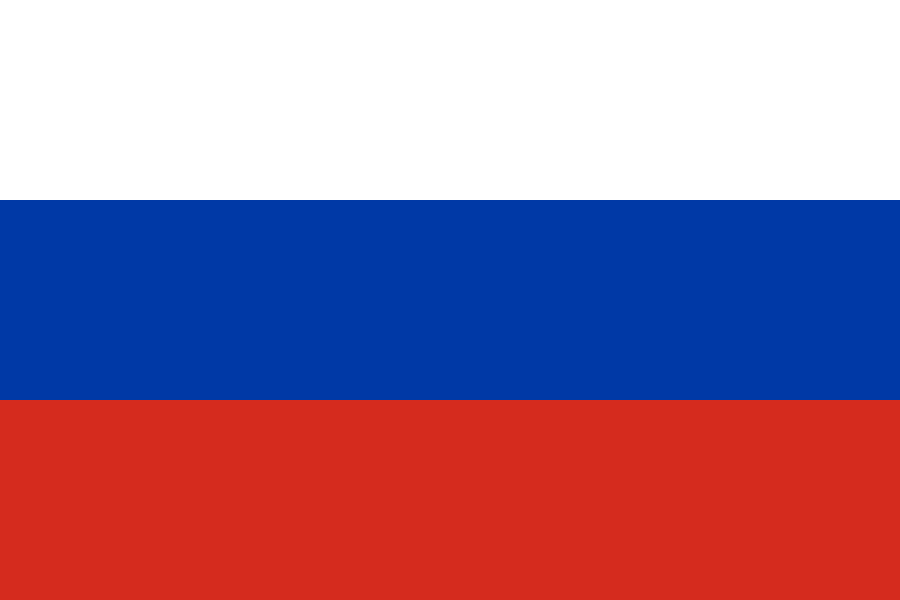
- Europe ranges from UTC+0 (Portugal, Iceland) to UTC+3 (Western Russia), with most countries in CET (UTC+1).
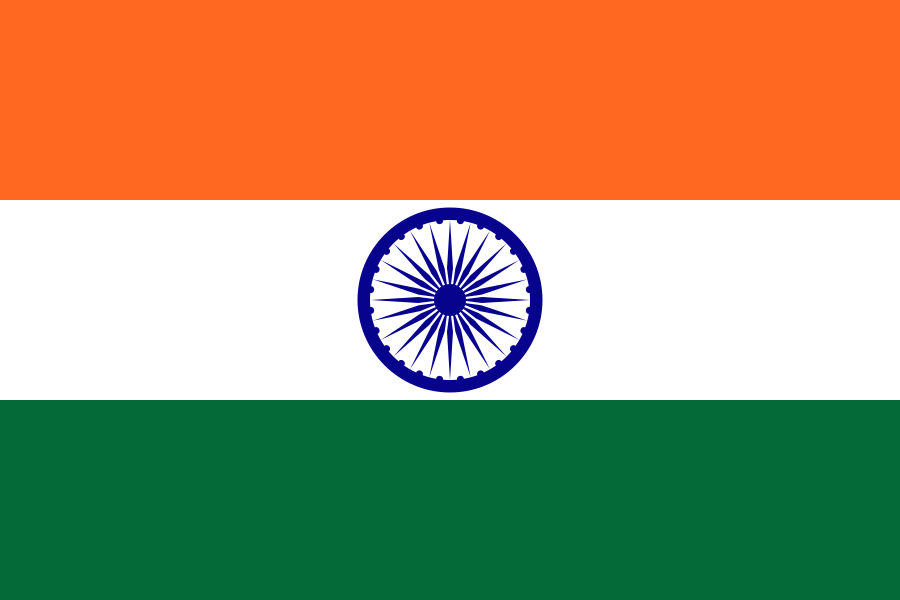
- Asia extends from UTC+3 (Middle East) to UTC+12 (Far East Russia), with notable offsets like UTC+5:30 (India) and UTC+5:45 (Nepal).
- North America uses UTC-10 (Hawaii) to UTC-3:30 (Newfoundland), with 6 main zones in the United States.
- South America covers UTC-5 (Colombia) to UTC-3 (Eastern Brazil).
- Africa spans UTC-1 (Cape Verde) to UTC+3 (East Africa) — most African countries do not observe daylight saving time.
- Oceania ranges from UTC+8 (Western Australia) to UTC+13 (Tonga, Samoa).
Daylight Saving Time
About 70 countries observe seasonal clock changes. Europe shifts forward on the last Sunday of March and back on the last Sunday of October. North America changes on the second Sunday of March and the first Sunday of November.
Unusual Time Zones
Some countries use non-standard offsets: India (UTC+5:30), Nepal (UTC+5:45), Iran (UTC+3:30), Myanmar (UTC+6:30), and New Zealand's Chatham Islands (UTC+12:45). China, despite its vast size, uses only one time zone (UTC+8).
Frequently asked questions
How many time zones are there in the world?
There are 24 main time zones, but counting 30 and 45-minute offsets (India, Nepal, Iran, etc.), there are over 37 distinct zones in use worldwide.
Which country has the most time zones?
France holds the record with 12 time zones thanks to its overseas territories. Russia comes second with 11 zones.
Why do some countries have 30-minute offsets?
India (UTC+5:30), Iran (UTC+3:30), and Nepal (UTC+5:45) use non-standard offsets to better match their geographical position relative to the sun.
What is UTC?
UTC (Coordinated Universal Time) is the global reference for time zone calculations. It corresponds to the time at the Greenwich Meridian in London, without seasonal clock changes.
How to calculate the time difference between two cities?
Subtract the UTC offset of the origin city from the destination. For example: Paris (UTC+1) → Tokyo (UTC+9) = 8 hours difference. Daylight saving time may change this calculation seasonally.
Which country sees the sunrise first?
Kiribati (UTC+14) and Tonga (UTC+13) are among the first to welcome each new day. American Samoa (UTC-11) is among the last.