Nassau
Bahamas
--:--
Nassau 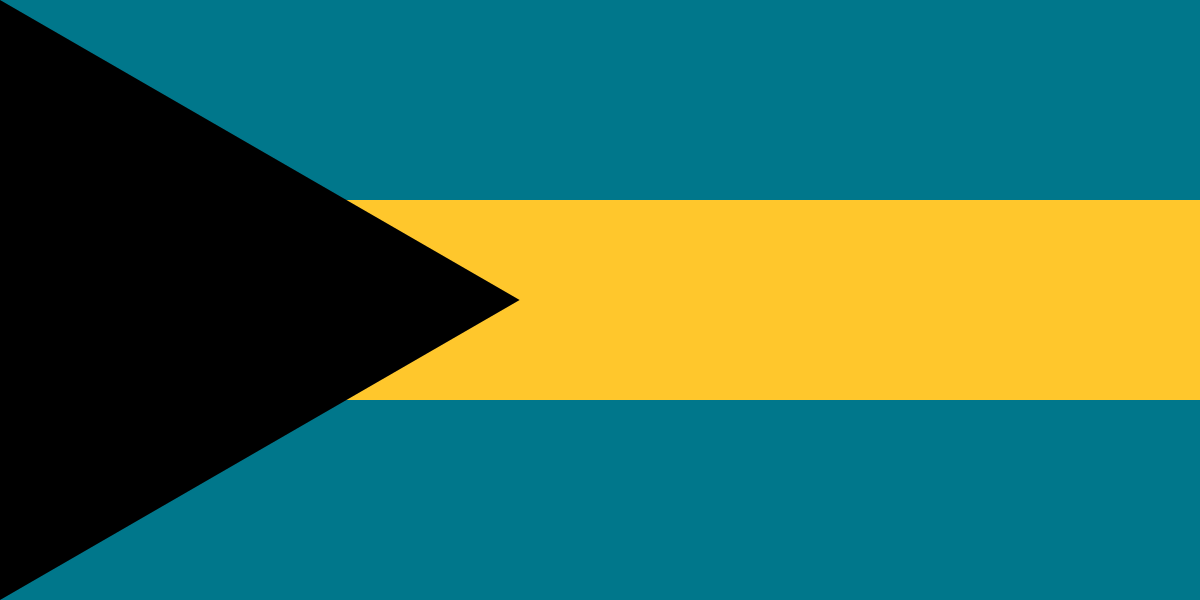
The Bahamas' observance of DST since 1962 has been tied to its close economic links with the US, but a quirky historical note is that during World War II, the islands briefly adopted British Double Summer Time in 1942-1943 to sync with Allied operations, advancing clocks by two hours for blackout efficiency. This wartime adjustment highlighted how even paradise adapts its rhythm to global events.
The Bahamas, a stunning archipelago nation in North America with a population of around 400,000, is renowned for its turquoise waters, pristine beaches, and vibrant culture. As a popular Caribbean destination, it operates on a single time zone that aligns closely with its North American neighbors, making it easy for travelers from the US and Canada to plan visits without major jet lag adjustments. The capital, Nassau, serves as the heartbeat of the country, where the time zone reflects the laid-back yet lively rhythm of island life.
The Bahamas follows the America/Nassau time zone, which is UTC-5 during standard time and shifts to UTC-4 during daylight saving time (DST). This single time zone covers the entire country, including Nassau and the surrounding islands like Grand Bahama and the Exumas, ensuring uniformity across the 700-plus cays and islands that make up this ISO BS-coded nation. Nassau, as the bustling capital on New Providence Island, exemplifies this zone, where clocks tick in sync with the tropical pace of daily activities from harbor cruises to market visits.
DST is observed in the Bahamas, mirroring the United States' schedule to facilitate trade and tourism. The switch to DST typically occurs on the second Sunday in March, when clocks spring forward by one hour at 2:00 a.m. local time, and it ends on the first Sunday in November, with clocks falling back at 2:00 a.m. This adjustment maximizes evening daylight during the warmer months, ideal for outdoor pursuits like snorkeling or beach volleyball. Without DST, the Bahamas would remain on Eastern Standard Time year-round, but the seasonal shift keeps the islands in harmony with major partners.
For international coordination, the time difference with London varies by season. In winter (standard time), London—on Greenwich Mean Time (UTC+0)—is five hours ahead of the Bahamas, so when it's noon in Nassau, it's 5:00 p.m. in the UK capital. During summer DST, this narrows to four hours, meaning a 9:00 a.m. meeting in the Bahamas aligns with 1:00 p.m. in London. This setup benefits business travelers and remote workers, as the Bahamas' time zone bridges the gap between North American and European schedules without excessive offsets. Whether you're booking a flight from Miami (just one hour ahead in winter) or syncing with European partners, understanding the America/Nassau zone and its DST rules ensures seamless planning for vacations or professional engagements in this sun-soaked paradise.
Life in the Bahamas pulses to a relaxed Caribbean beat, where the day's structure revolves around the sun, sea, and community traditions. Breakfast is typically enjoyed between 7:00 a.m. and 9:00 a.m., often featuring fresh conch fritters, johnnycakes, or tropical fruits at beachside spots in Nassau. Lunch follows around noon to 2:00 p.m., a lighter affair with seafood salads or peas and rice, allowing time for siestas during the midday heat— a nod to the islands' equatorial climate. Dinner kicks off by 6:00 p.m. to 8:00 p.m., with family gatherings over grilled grouper or souse, extending into lively evenings under the stars.
Office hours generally run from 9:00 a.m. to 5:00 p.m., Monday through Friday, in sectors like tourism, finance, and government administration in Nassau's business district. Banks and administrative offices, such as those handling ISO BS-related services or visitor visas, often close by 4:00 p.m., while shops and markets stay open until 6:00 p.m. or later, especially in tourist hubs like Bay Street. A unique local specificity is the "Bahamian time" ethos— a flexible approach where punctuality is appreciated but not rigid, influenced by the islands' fishing heritage and unpredictable weather. Nightlife thrives post-8:00 p.m., with Junkanoo-inspired music festivals, rum bars, and casino hopping in Paradise Island keeping the energy high until the early hours, particularly on weekends.
Sundays serve as the primary day of rest, with many businesses shuttered for church services and family beach outings, reflecting the strong Christian traditions across the archipelago. Sunrise and sunset times add to this natural cadence; at the winter solstice in Nassau, the sun rises around 6:50 a.m. and sets by 5:30 p.m. local time, shortening days for cozy indoor rituals like storytelling. In contrast, the summer solstice brings longer light, with sunrise at about 6:20 a.m. and sunset near 8:00 p.m., perfect for extended water sports or stargazing. This solar rhythm underscores the Bahamas' appeal as a destination where time feels abundant, blending work, leisure, and cultural immersion in a way that rejuvenates the soul.