Reykjavik
Iceland
--:--
Reykjavik 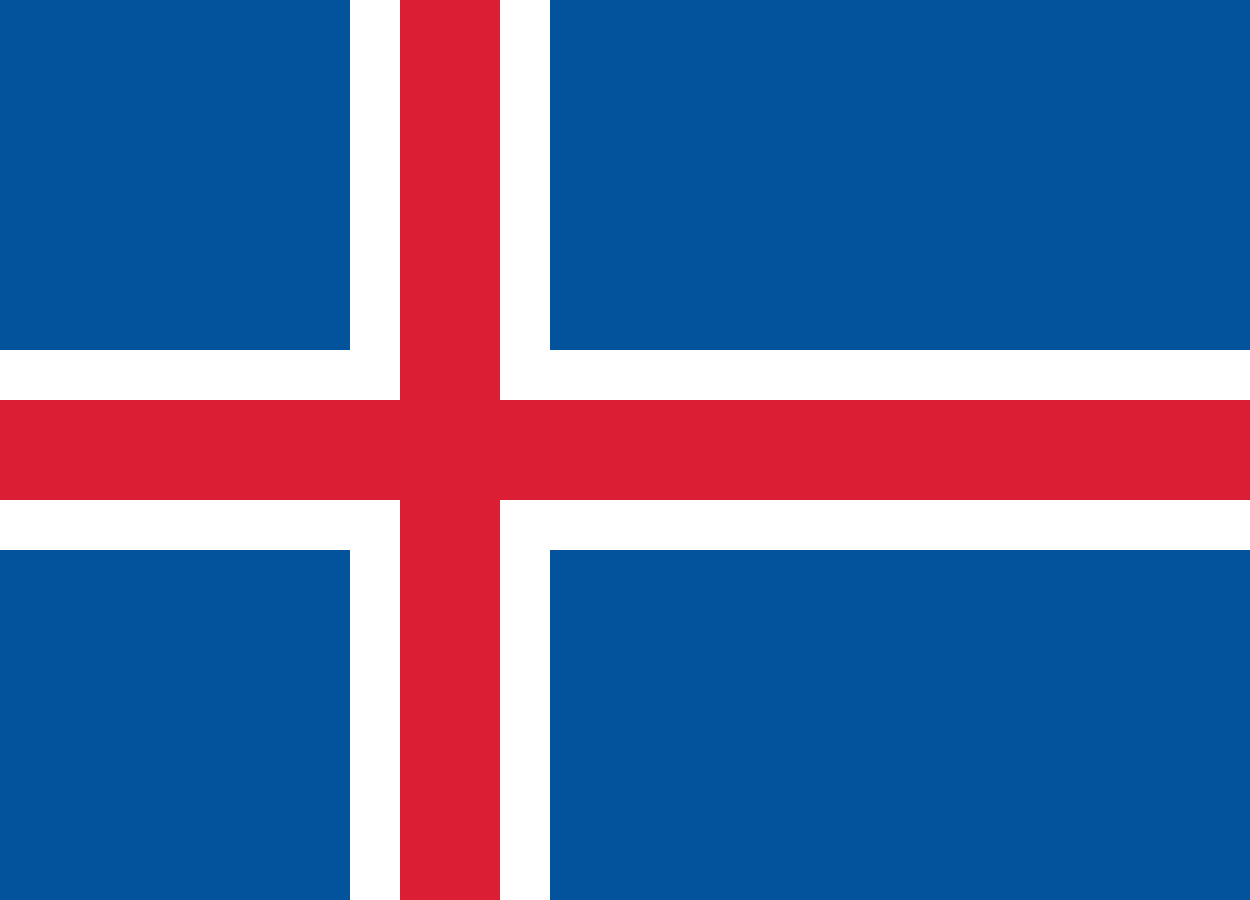
Iceland's decision to abandon daylight saving time in 1981 was influenced by a public vote and practical needs, making it one of the few European countries to stick with UTC+0 year-round, which has helped synchronize its fishing industry with global markets without seasonal shifts. This timeless approach also enhances the magic of the midnight sun, visible in Reykjavik from May to July, where the sun circles the sky without setting for up to 21 hours on the summer solstice.
Iceland, a Nordic island nation in Europe with a population of around 370,000, is renowned for its dramatic landscapes, geothermal wonders, and unique cultural heritage. The capital, Reykjavik, serves as the heartbeat of this sparsely populated country, where the ISO code IS identifies it on the global stage. With just one time zone encompassing the entire island, Iceland operates on a straightforward schedule that simplifies travel and communication for visitors from around the world.
Iceland adheres to a single time zone, identified by the IANA time zone database as Atlantic/Reykjavik, with a consistent UTC offset of UTC+0 throughout the year. This zone covers the whole country, including the capital Reykjavik, ensuring uniformity whether you're exploring the rugged highlands or the bustling streets of the capital. Unlike many European neighbors, Iceland does not observe daylight saving time (DST), a policy solidified in 1981 when the country permanently adopted Greenwich Mean Time (GMT) to avoid the disruptions of seasonal clock changes. This decision was driven by practical considerations, as the island's remote location and minimal agricultural needs made DST unnecessary, promoting energy efficiency and alignment with international maritime standards.
The absence of DST means Iceland's clocks remain stable, making it easier for locals and travelers to plan without worrying about biannual adjustments. For instance, Reykjavik's time stays fixed at UTC+0, so sunrise and sunset times shift naturally with the seasons rather than being artificially extended. In comparison to London, which follows GMT (UTC+0) in winter and British Summer Time (BST, UTC+1) from late March to late October, Iceland matches London's winter hours exactly but falls one hour behind during the UK's summer period. This creates a seamless connection for winter communications—calling from London to Reykjavik feels instantaneous in terms of time alignment—while summer visitors from the UK might notice Iceland's earlier evenings. Overall, this single-zone, no-DST system reflects Iceland's pragmatic approach to time management, benefiting tourists scheduling flights, tours, or business meetings across its vast, volcanic terrain. With no switchover dates to track, planning a trip to Iceland's time zone is refreshingly simple, allowing focus on experiences like the Northern Lights or Blue Lagoon without temporal confusion.
Life in Iceland pulses to a rhythm shaped by its harsh climate, long summer days, and close-knit communities, where the daily schedule emphasizes work-life balance and seasonal adaptations. Typical meal times start with a hearty breakfast around 7-8 a.m., often featuring skyr yogurt, fresh bread, and coffee to fuel the day amid crisp mornings. Lunch, usually between 11:30 a.m. and 1 p.m., is a lighter affair—think fish soups or lamb stews—eaten quickly during short breaks, reflecting the efficient pace of Icelandic work culture. Dinner, the main meal, arrives late, from 7 p.m. to 9 p.m., allowing families to unwind after the day's activities, often with relaxed gatherings that extend into the evening.
Office hours generally run from 9 a.m. to 5 p.m., Monday through Friday, with many administrative buildings and government offices in Reykjavik opening at 8 a.m. for early birds. Shops follow a similar pattern: supermarkets and malls operate from 9 a.m. to 6 p.m. on weekdays, shortening to 10 a.m. to 4 p.m. on Saturdays, while Sundays serve as the primary day of rest, with most retail closed except for a few tourist spots or emergency services. This weekly pause underscores Iceland's strong emphasis on Sabbath observance, rooted in Lutheran traditions, giving residents time for family hikes or geothermal spa visits. Local specifics add flavor to the routine—rituals like the Thursday "beer day" (since alcohol sales were legalized in 1989) spark social gatherings, and nightlife in Reykjavik thrives late, with bars open until 1 a.m. and clubs pulsing until 4:30 a.m. on weekends, fueled by the midnight sun's energy.
Seasonal extremes influence this rhythm profoundly. At the summer solstice in June, Reykjavik enjoys near-24-hour daylight, with the sun dipping below the horizon for just three hours around midnight, encouraging outdoor festivals and extended evenings. Conversely, the winter solstice in December brings polar twilight, where daylight lasts only about four to five hours, prompting earlier bedtimes and cozy indoor pursuits like reading or hot pot gatherings. These solstice variations highlight how Icelanders adapt their daily flow to nature's whims, blending modern efficiency with ancient resilience in a country where time feels both eternal and fleeting.