Skopje
North Macedonia
--:--
Skopje 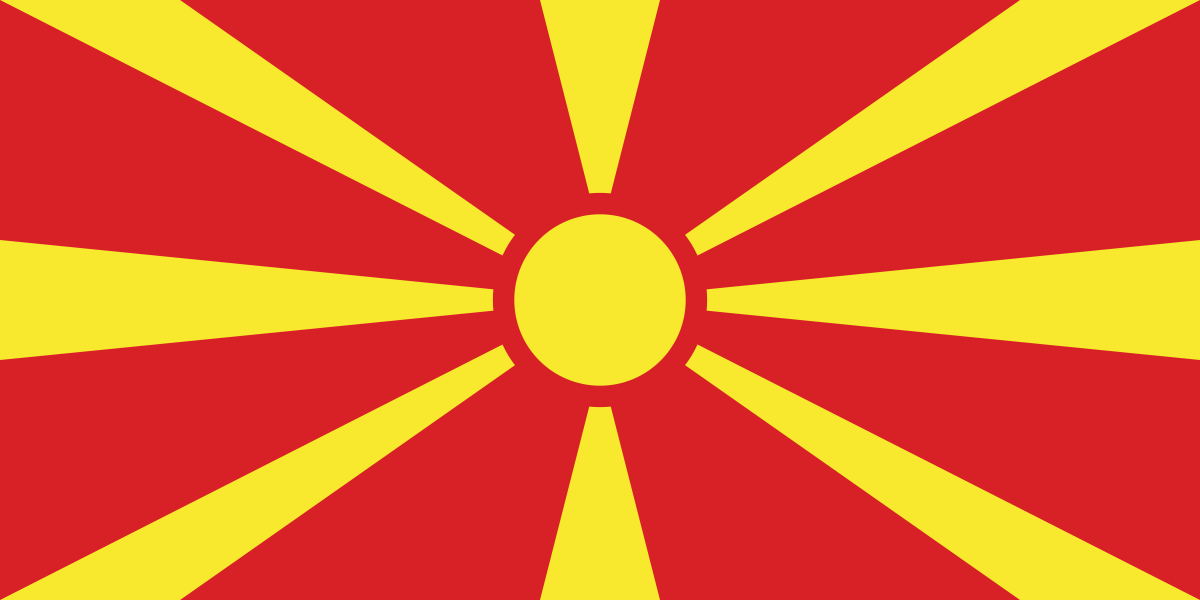
North Macedonia's adoption of daylight saving time in 1983 coincided with its push for European integration, but a quirky 1991 interruption during political unrest saw clocks briefly revert, highlighting how national events can disrupt even the steadiest timekeeping. Today, this Balkan nation's synchronized rhythm with Central Europe supports its thriving festival scene, like the Skopje Jazz Fest, which kicks off precisely at sunset in summer for optimal vibes.
Nestled in the heart of the Balkans, North Macedonia is a landlocked European nation known for its rich history, stunning lakes, and mountainous landscapes. With a population of around 2.1 million and its capital in Skopje, the country operates on a single time zone that keeps pace with Central European rhythms. Whether you're planning a trip to explore ancient monasteries or connect with family, understanding the time in North Macedonia ensures seamless coordination across borders.
North Macedonia adheres to a single time zone, designated as Europe/Skopje in the IANA database, which follows Central European Time (CET) with a standard UTC offset of +1 hour. This zone encompasses the entire country, including the bustling capital of Skopje, where daily life syncs perfectly with this offset—making it straightforward for visitors and remote workers to adjust. In winter months, clocks run on CET (UTC+1), providing a consistent framework for business and travel logistics in this ISO MK-coded nation.
Daylight saving time (DST) is observed in North Macedonia, aligning with most of Europe to maximize evening daylight. The switch to Central European Summer Time (CEST, UTC+2) occurs on the last Sunday of March, typically around 2:00 AM local time when clocks spring forward by one hour. The reverse happens on the last Sunday of October, with clocks falling back at 3:00 AM CEST to resume CET. This biannual adjustment, in place since 1983 with minor interruptions, helps extend outdoor activities during the warmer seasons.
When comparing to London, the time difference remains a steady +1 hour year-round due to synchronized DST practices. In winter, North Macedonia (UTC+1) is one hour ahead of London (UTC+0, Greenwich Mean Time). During summer, both advance to UTC+2 and UTC+1 respectively (British Summer Time), maintaining the +1 hour gap. This consistency simplifies scheduling calls or flights from the UK— for instance, a 9:00 AM meeting in Skopje aligns with 8:00 AM in London regardless of season. For those in the US, the offset varies more widely: Eastern Standard Time (EST, UTC-5) means North Macedonia is +6 hours ahead in winter, narrowing to +5 hours during US DST overlap with North Macedonia's summer time. These details are crucial for global businesses eyeing North Macedonia's growing tech and tourism sectors, ensuring no missed connections in this vibrant Balkan hub.
Life in North Macedonia pulses with a blend of traditional Balkan hospitality and modern European efficiency, shaped by its Mediterranean climate and Orthodox Christian heritage. Meals form the cornerstone of the daily rhythm: breakfast is light and early, often around 7:00–8:00 AM, featuring fresh burek (pastry) or yogurt with local honey. Lunch, the main meal, typically unfolds between 1:00 PM and 3:00 PM, with families gathering for hearty dishes like tavče gravče (bean stew) or grilled meats— a time when offices often pause for a relaxed break. Dinner is later, starting around 8:00 PM or even 9:00 PM, extending into sociable evenings with rakija (fruit brandy) and meze platters, reflecting the country's emphasis on community over rushed schedules.
Office hours generally run from 8:00 AM to 4:00 PM, Monday through Friday, with government and administrative services in Skopje mirroring this—though summer Fridays might end early around 2:00 PM for weekend escapes to Lake Ohrid. Shops and markets buzz from 9:00 AM to 9:00 PM, especially in urban areas, but smaller stores in rural regions close by 7:00 PM. Sundays serve as the primary day of rest, with many businesses shuttered and locals attending church services or enjoying family outings, underscoring the cultural reverence for the Sabbath in this predominantly Orthodox nation.
Local specifics add flavor to the tempo: coffee breaks are sacred rituals, often stretching into hour-long chats at kafanas (taverns), while nightlife in Skopje thrives late into the night, with bars and clubs open until 2:00 AM or later on weekends. Siestas aren't formal, but the post-lunch lull allows for a slower pace in hotter months. Sunrise and sunset times vary seasonally; on the summer solstice (around June 21), dawn breaks near 5:00 AM in Skopje, with sunset lingering past 8:00 PM, ideal for outdoor festivals. Winter solstice sees sunrise after 7:00 AM and dusk by 4:00 PM, prompting earlier indoor gatherings. This rhythmic balance of work, rest, and revelry makes North Macedonia's daily flow both invigorating and approachable for travelers seeking authentic European experiences.