La Valette
Malta
--:--
Malta 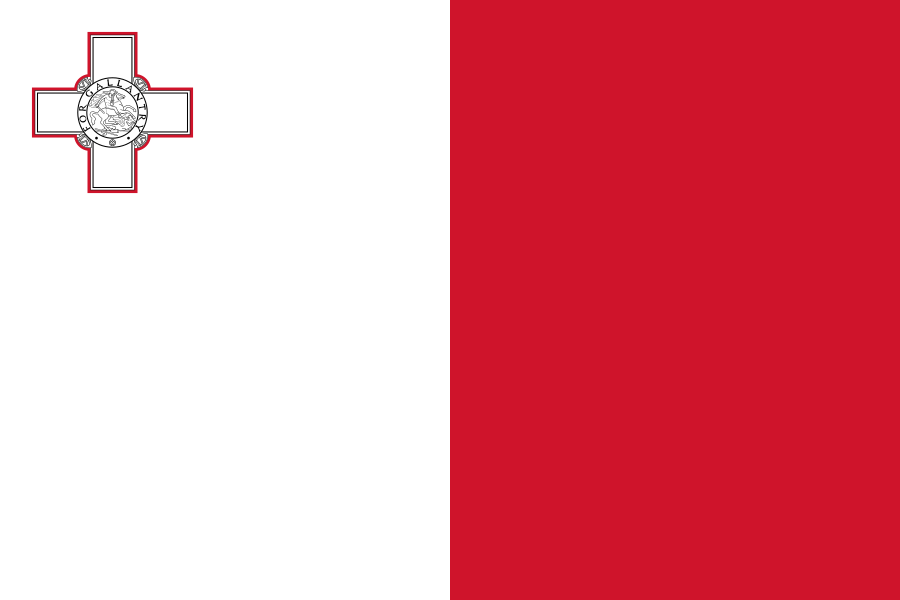
Malta's Upper Barrakka Gardens in Valletta features a historic clock tower from 1814, originally installed by the British to synchronize the island's time amid naval operations, ensuring precise coordination for ships in the Grand Harbour. This relic highlights how timekeeping was vital to Malta's strategic role in Mediterranean trade and defense for centuries.
Malta, a stunning archipelago nation in the heart of the Mediterranean Sea within Europe, captivates visitors with its rich history, azure waters, and vibrant culture. Home to around 520,000 residents and boasting Valletta as its UNESCO-listed capital, this ISO MT-coded country operates on a single time zone that aligns seamlessly with its sunny, island lifestyle. Whether you're planning a trip to explore ancient temples or simply coordinating calls across continents, understanding the time in Malta ensures you stay in sync with its lively rhythm.
The time zone in Malta is defined by the IANA identifier Europe/Malta, which follows Central European Time (CET) with a standard UTC offset of UTC+01:00 during winter months. This single time zone covers the entire country, including the capital Valletta, where clocks tick in unison with the rest of the islands—Gozo, Comino, and the main island of Malta itself. No regional variations exist, making it straightforward for travelers and businesses to adjust without confusion.
Malta observes daylight saving time (DST), shifting clocks forward by one hour to Central European Summer Time (CEST, UTC+02:00) on the last Sunday in March, typically around 1:00 AM CET when time advances to 2:00 AM. The switch back to standard time occurs on the last Sunday in October, at 3:00 AM CEST, when clocks fall back to 2:00 AM CET. This practice, aligned with most of Europe, maximizes evening daylight during the warmer seasons, enhancing Malta's appeal for outdoor activities like beach lounging or harbor cruises in Valletta.
When comparing to London, Malta maintains a consistent one-hour lead year-round. In winter, as London follows Greenwich Mean Time (GMT, UTC+00:00), Malta's CET puts it one hour ahead—for instance, if it's 9:00 AM in London, it's 10:00 AM in Valletta. During summer, London's British Summer Time (BST, UTC+01:00) brings it closer, but Malta's CEST (UTC+02:00) still keeps it one hour ahead; 9:00 AM BST in London means 10:00 AM CEST in Malta. This predictable difference simplifies scheduling for UK visitors, who can enjoy Malta's balmy evenings without major jet lag adjustments. For those from further afield, like the US East Coast on Eastern Standard Time (EST, UTC-05:00), the winter gap is six hours (Malta ahead), narrowing to five in summer due to DST alignments. Malta's time zone adherence ensures reliable connectivity, whether for virtual meetings or real-time updates on ferry schedules between islands.
Life in Malta pulses with a Mediterranean cadence, blending Italian influences, British colonial echoes, and local traditions into a relaxed yet efficient daily flow. Meals anchor the day: breakfast is light and early, often around 7:00–8:00 AM with fresh pastizzi pastries and coffee before work. Lunch, the main meal, typically falls between 1:00 PM and 2:30 PM, featuring family-style dishes like rabbit stew or seafood amid a brief pause from the midday heat—though true siestas are rare, many use this time for a leisurely stroll. Dinner starts late, from 8:00 PM onward, extending into sociable evenings with ftira bread, cheeses, and wine, reflecting the island's love for lingering over food under the stars.
Office and administrative hours generally run from 8:00 AM to 4:00 PM or 9:00 AM to 5:00 PM, Monday through Friday, with government offices in Valletta often closing for a long lunch from 1:00 PM to 2:00 PM. Shops and businesses adapt to the climate, opening at 9:00 AM, shutting at 1:00 PM for the hottest hours, then reopening from 4:00 PM to 7:00 PM or later in tourist areas. Banks follow suit, typically 8:30 AM–12:30 PM and 2:00 PM–4:00 PM. Sundays serve as the weekly rest day, with most shops closed and a focus on church services, family gatherings, or quiet beach time— a nod to Malta's deeply Catholic heritage, where festas (saint's day celebrations) punctuate the calendar with fireworks and processions that can stretch into the night.
Nightlife adds vibrancy, especially in Valletta and Sliema, where bars and clubs buzz from 10:00 PM until the early hours, fueled by Maltese wines and live music. Seasonal sunlight shapes this rhythm: on the summer solstice (around June 21), sunrise in Valletta hits about 5:25 AM, with sunset near 8:35 PM, granting over 15 hours of daylight for extended outdoor pursuits. Winter solstice (December 21) reverses this, with sunrise at 7:15 AM and sunset by 5:05 PM, encouraging cozy indoor evenings. These patterns underscore Malta's harmonious blend of work, rest, and revelry, inviting visitors to immerse in its timeless island vibe.
Malta's compact size and single time zone make it an ideal destination for seamless time management, whether syncing with European partners or enjoying the archipelago's eternal summer feel. From the historic streets of Valletta to the azure bays of Gozo, the time in Malta invites exploration without the hassle of offsets. As a gateway to Europe's southern charm, this 520,000-strong nation ensures your schedule aligns perfectly with its sun-drenched days and starlit nights.