Chișinău
Moldova
--:--
Chisinau 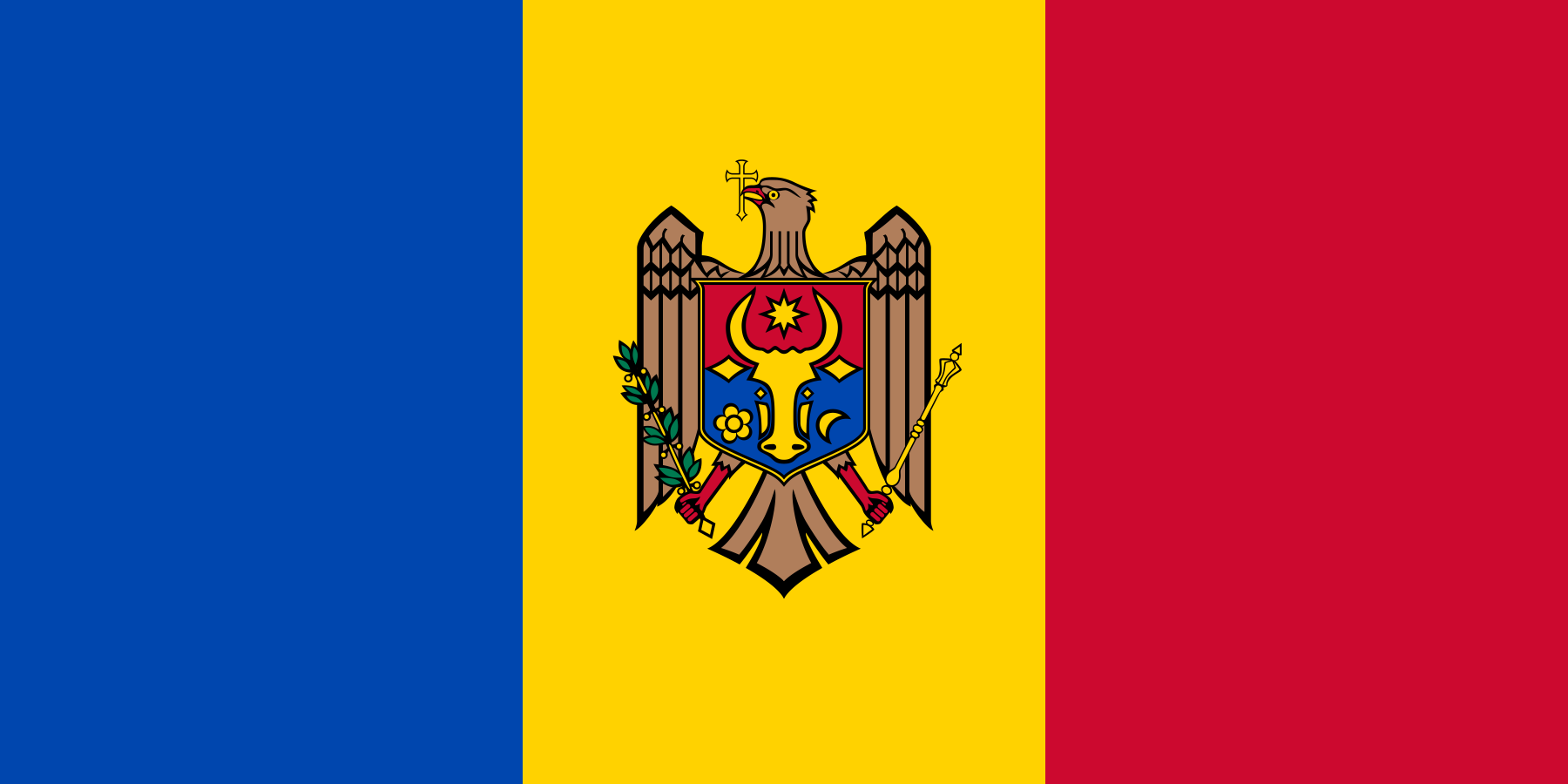
Moldova's observance of DST since 1997 has synchronized its wine export schedules with European markets, notably allowing the annual "Day of the National Wine" festival on the first Saturday of October to kick off just after the fall-back clock change, extending evening celebrations under longer perceived daylight. This timing, verified in national holiday records, celebrates the country's status as one of the world's top wine producers per capita.
Nestled in Eastern Europe between Romania and Ukraine, Moldova is a landlocked nation known for its rich wine heritage and rolling vineyards, with a population of around 2.6 million people. The capital, Chișinău, serves as the political, economic, and cultural heart of the country, blending Soviet-era architecture with vibrant markets and parks. Moldova operates on a single time zone, making it straightforward for travelers and businesses to coordinate schedules across its compact territory of about 33,800 square kilometers.
Moldova adheres to Eastern European Time (EET), with the official IANA time zone identifier being Europe/Chisinau. This places the country at a standard UTC+2 offset during winter months, aligning it with much of Eastern Europe. In Chișinău, the bustling capital home to over 500,000 residents, clocks follow this zone precisely, ensuring synchronized operations for government offices, international flights at Chișinău International Airport, and daily commerce in the ISO MD-coded nation.
Daylight saving time (DST) is observed in Moldova, as confirmed by its "oui" status in regional standards. The switch to Eastern European Summer Time (EEST, UTC+3) occurs on the last Sunday of March, typically around 2:00 AM local time when clocks spring forward by one hour. The reverse happens on the last Sunday of October, with clocks falling back at 3:00 AM EEST to resume EET. This biannual adjustment, rooted in energy-saving practices adopted post-Soviet era, affects everything from public transport schedules to agricultural harvests in Moldova's fertile plains.
When comparing to London, which uses Greenwich Mean Time (GMT, UTC+0) in winter and British Summer Time (BST, UTC+1) during DST, the time difference remains consistently two hours ahead in Moldova year-round. For instance, during winter, when it's 9:00 AM in London, it's 11:00 AM in Chișinău; in summer, 9:00 AM BST in London corresponds to 11:00 AM EEST in Moldova. This stable offset simplifies planning for UK-Moldova interactions, such as business calls or tourism bookings. Travelers from Western Europe appreciate the minimal jet lag, while those coordinating with the US East Coast face a more pronounced gap—typically seven hours ahead in winter. Moldova's single time zone policy, established since independence in 1991, avoids the complications of multi-zone countries, fostering national unity in timing for events like the annual Wine Day festival in October, just after DST ends. Overall, understanding these nuances ensures seamless connectivity in this European gem, whether for remote work or exploring its UNESCO-listed sites.
Moldova's daily rhythm reflects its blend of Orthodox Christian traditions, rural roots, and urban modernization, with a pace that slows in the countryside and quickens in Chișinău. Breakfast, often a light affair of mămăligă (cornmeal porridge) with cheese or fresh bread, is typically enjoyed between 7:00 and 8:00 AM, aligning with early sunrise in summer. Lunch, the main meal, revolves around hearty dishes like sarmale (cabbage rolls) or plăcintă (pies) and occurs from 12:00 to 2:00 PM, when families and workers pause for a communal break— a custom influenced by Soviet-era canteen schedules still lingering in public sectors.
Office hours in Moldova generally run from 9:00 AM to 5:00 or 6:00 PM, Monday through Friday, with government and administrative buildings like those in Chișinău's city center opening at 8:00 or 9:00 AM. Banks and post offices follow suit, closing by 5:00 PM, while private businesses may extend to 7:00 PM. Shops and markets, such as the vibrant Central Market in the capital, buzz from 8:00 AM to 7:00 or 8:00 PM, with smaller vendors in rural areas wrapping up earlier around sunset. Weekends emphasize rest, with Sunday as the primary day off, dedicated to church services—Orthodox liturgy often starts at 8:00 or 9:00 AM—and family gatherings; many shops close or operate reduced hours, honoring this tradition in a country where over 90% identify as Orthodox.
Local specifics add flavor to the tempo: evenings come alive with café culture in Chișinău, where nightlife peaks from 10:00 PM onward in areas like the Râșcani district, featuring wine bars open until midnight or later on weekends. Rituals like the hora (traditional circle dance) at festivals punctuate the rhythm, often timed to dusk. In summer, sunrise around 5:00 AM at the June solstice extends daylight for outdoor pursuits, while winter sunsets by 4:30 PM in December encourage early indoor coziness with hot mamaliga. This seasonal shift influences agricultural life, where farmers rise with dawn for grape harvests in autumn. For visitors, syncing with these patterns—avoiding siesta-like lulls post-lunch—enhances immersion in Moldova's welcoming, unhurried vibe, from dawn markets to twilight toasts.