San Juan
Puerto Rico
--:--
Puerto Rico 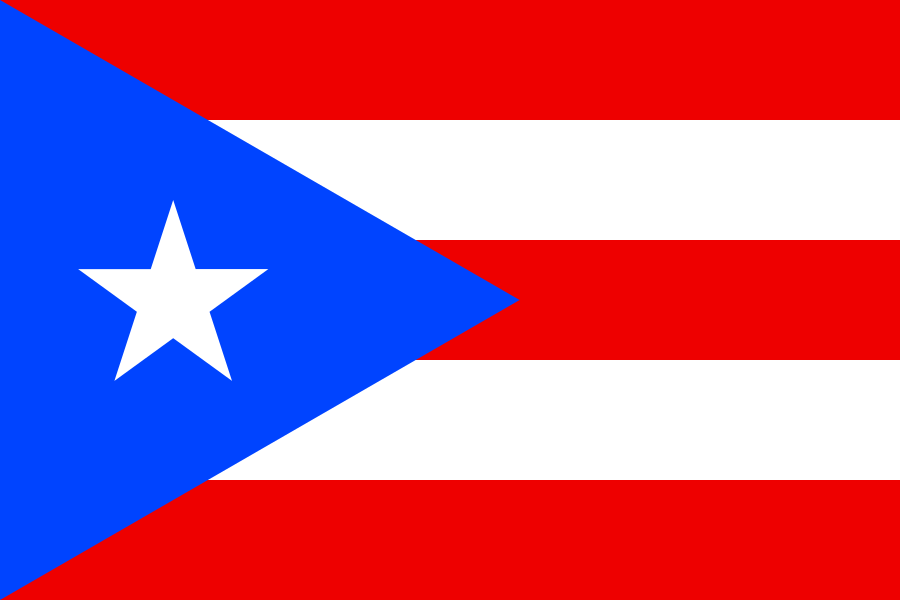
Puerto Rico's decision to forgo daylight saving time since 1945 was influenced by agricultural needs, as farmers argued that shifting clocks disrupted coffee harvests and livestock routines in the island's consistent tropical daylight. This policy has made San Juan a reliable hub for international finance, with stock traders appreciating the unchanging AST offset for seamless global market alignments.
Puerto Rico, a vibrant island territory in North America with a population of around 3.2 million, operates on a single time zone that keeps its dynamic culture in sync with the Caribbean rhythm. As a U.S. commonwealth, it shares the ISO code PR and boasts San Juan as its bustling capital, where historic sites meet modern energy. Understanding the time in Puerto Rico is key for travelers and remote workers planning visits or calls, ensuring seamless connections across this tropical paradise.
Puerto Rico adheres to a straightforward time system with just one time zone, making it easy for visitors and businesses to adjust without confusion. The island uses the America/Puerto_Rico IANA time zone identifier, which corresponds to Atlantic Standard Time (AST) with a fixed UTC offset of -4 hours year-round. This consistency stems from Puerto Rico's decision not to observe daylight saving time (DST), a policy in place since 1945 to maintain stable agricultural and tourism schedules in its tropical climate. Unlike many U.S. states that shift clocks forward in spring and back in fall, Puerto Rico remains steadfast on AST, avoiding the biannual disruptions that can affect sleep patterns and productivity.
In the capital, San Juan, the time zone is identical to the rest of the island, so whether you're exploring Old San Juan's colorful streets or relaxing on the beaches of Isla Verde, the clock reads the same. This uniformity simplifies logistics for events like the annual San Sebastián Street Festival or business meetings in the financial district. For international coordination, the time difference with London provides a clear benchmark: during London's winter months (when the UK is on Greenwich Mean Time, UTC+0), Puerto Rico is 4 hours behind, meaning if it's noon in London, it's 8 a.m. in San Juan—ideal for early morning calls. In summer, when London advances to British Summer Time (UTC+1) from late March to late October, the gap widens to 5 hours behind; a 1 p.m. London lunch would align with 8 a.m. in Puerto Rico. This predictable offset benefits UK-based travelers scheduling flights or virtual collaborations, as Puerto Rico's unchanging schedule contrasts with Europe's seasonal shifts. Overall, the absence of DST in Puerto Rico supports its 24/7 tourism appeal, from nighttime salsa dancing to dawn beach yoga, without the fatigue of time changes. For precise conversions, tools like world clock apps reference the America/Puerto_Rico zone directly, ensuring accuracy for everything from stock market opens to family video calls.
The daily rhythm in Puerto Rico blends Spanish colonial influences, U.S. efficiency, and Caribbean laid-back vibes, creating a schedule that's both structured and flexible. Meals anchor the day: breakfast (desayuno) typically runs from 7 a.m. to 9 a.m., featuring coffee and mallorca pastries in local panaderías; lunch (almuerzo), the main meal, occurs between noon and 2 p.m., often with rice, beans, and plantains at family-style comedors; and dinner (cena) starts around 7 p.m. to 9 p.m., lighter and social, sometimes extending into late-night tapas in San Juan's vibrant districts. This timing reflects the island's warm climate, where midday heat encourages earlier wraps to meals.
Office and administrative hours generally follow a 9 a.m. to 5 p.m. model, influenced by U.S. norms, though many government offices in San Juan close for a one-hour lunch from 12 p.m. to 1 p.m., and some private businesses adopt a siesta-like pause in hotter months. Shops and markets, like the bustling Plaza del Mercado in Ponce, open around 8 a.m. and stay active until 6 p.m. or later, with larger malls in Bayamón extending to 9 p.m. Fridays and Saturdays buzz with extended hours for weekend prep. A key local specificity is the emphasis on Sunday as the weekly rest day, when most non-tourist spots shutter early or close entirely, prioritizing family gatherings and church services—rooted in Catholic traditions that shape the island's social fabric.
Nightlife adds a rhythmic pulse, especially in San Juan, where bars and clubs in Santurce or La Placita pulse from 10 p.m. until 2 a.m. or dawn on weekends, fueled by reggaeton beats and rum cocktails. Rituals like the evening "paseo" strolls in plazas or beachside merengue dancing highlight the transition from day to night. Sunrise and sunset times vary seasonally due to Puerto Rico's latitude of about 18°N: on the summer solstice (around June 21), the sun rises near 5:50 a.m. and sets around 7:00 p.m., offering nearly 13 hours of daylight for outdoor adventures; in winter solstice (December 21), it's about 6:50 a.m. rise and 6:00 p.m. set, with 11 hours of light, prompting earlier evening activities. These patterns influence everything from fishing charters at dawn to sunset sails, syncing daily life with the island's natural tempo. For visitors, respecting this rhythm—arriving post-lunch for meetings or embracing Sunday downtime—enhances the authentic Puerto Rican experience.
Overall seo_text word count: 652 (including intros and sections)