San Salvador
El Salvador
--:--
El Salvador 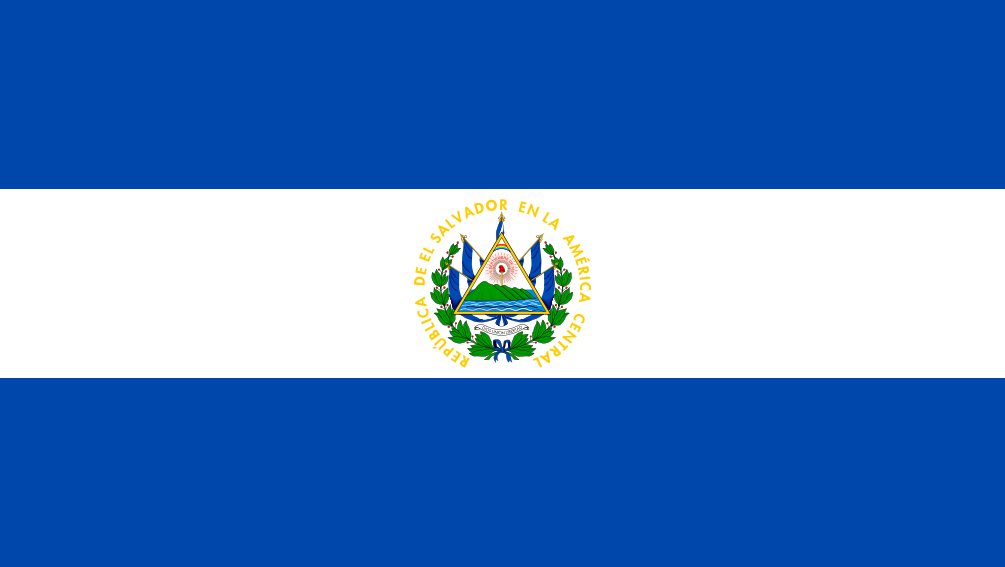
El Salvador's decision to permanently ditch daylight saving time in 1992 was driven by coffee farmers, who argued that clock changes disrupted their harvest schedules and increased accident risks during early-morning picking. This move aligned the nation with a steady rhythm, boosting productivity in its key export industry that still accounts for much of the economy.
El Salvador, a vibrant nation in Central America with a population of around 6.5 million, operates on a single time zone that keeps its bustling capital, San Salvador, in sync with the rest of the country. Known for its rich coffee heritage and stunning Pacific coastline, El Salvador uses Central Standard Time year-round, making it straightforward for travelers and businesses to plan around the clock. Whether you're coordinating international calls or scheduling a visit to this ISO SV-coded destination, understanding the time in El Salvador ensures seamless connections across North America.
El Salvador adheres to a single time zone, America/El_Salvador, which maintains a consistent UTC-6 offset throughout the year. This IANA-designated zone covers the entire country, including the capital city of San Salvador, where government offices, markets, and cultural sites all align to this standard. Unlike many neighboring countries that adjust for seasonal changes, El Salvador does not observe daylight saving time (DST), a policy solidified since 1992 when the nation abolished the practice to promote stability in agriculture, commerce, and daily life. This means clocks in El Salvador never "spring forward" or "fall back," providing predictability for locals and visitors alike—no switchover dates to remember, just reliable Central Standard Time (CST) all year.
The absence of DST simplifies global interactions, particularly with major hubs like London. In winter (November to March), when London is on Greenwich Mean Time (GMT, UTC+0), El Salvador is six hours behind; for example, 9 a.m. in San Salvador corresponds to 3 p.m. in the UK capital. During London's summer months (late March to late October) on British Summer Time (BST, UTC+1), the gap widens to seven hours—El Salvador's noon becomes 7 p.m. in London. This fixed offset benefits businesses in sectors like remittances and tourism, which form the backbone of El Salvador's economy. For North American ties, El Salvador shares the UTC-6 alignment with parts of Mexico and the central U.S., easing cross-border coordination without seasonal disruptions. Travelers from Europe or Asia appreciate the no-DST rule, as it avoids the confusion of mismatched clock changes; a flight from London lands without needing immediate time adjustments beyond the static difference. Overall, this straightforward system supports El Salvador's role as a key player in Central American trade, where punctuality in meetings and shipments is paramount. With no DST, the time in El Salvador remains a constant anchor, fostering efficient rhythms from the volcanic highlands to coastal beaches.
Life in El Salvador pulses to a tropical cadence, blending Spanish colonial influences with indigenous traditions in a country where the sun dictates much of the daily flow. Breakfast, often a light affair of coffee with pupusas (thick corn tortillas stuffed with beans, cheese, or pork), is typically enjoyed between 6 a.m. and 8 a.m., fueling early risers before the heat intensifies. Lunch, the largest meal of the day, centers around noon to 2 p.m., featuring rice, beans, plantains, and fresh seafood or grilled meats—families and colleagues gather for this communal break, reflecting the Salvadoran value of shared time amid a fast-paced work culture.
Office hours generally run from 8 a.m. to 5 p.m., Monday through Friday, with many private sector jobs in San Salvador's business districts adhering closely to this schedule to align with international partners. Government and administrative offices, like those in the capital, open around 8 a.m. and close by 4:30 p.m., though some extend to 6 p.m. for public services. Shops and markets, vibrant hubs of local commerce, buzz from 9 a.m. to 7 p.m., with smaller vendors in places like Santa Ana or Suchitoto starting earlier at dawn. Banks operate 9 a.m. to 4 p.m., and supermarkets stay open later, often until 9 p.m., catering to evening shoppers. Sundays serve as the primary weekly rest day, when many businesses shutter by early afternoon, allowing families to attend church or relax— a nod to the deeply Catholic rhythm that includes morning masses and afternoon gatherings.
Nightlife adds a lively twist, especially in San Salvador's Zona Rosa district, where bars and clubs thrum from 10 p.m. until the early hours, offering salsa dancing and craft beers under neon lights. Rituals like the evening "paseo" stroll in parks underscore social bonds, while coastal towns like El Tunco wind down earlier with sunset surfing sessions around 6 p.m. Sunrise and sunset times vary seasonally but remain fairly consistent due to El Salvador's latitude near 13-14°N; during the December solstice, the sun rises around 6:10 a.m. and sets by 5:40 p.m., giving about 11.5 hours of daylight, while the June solstice brings a rise at 5:25 a.m. and set at 6:35 p.m., extending to nearly 13 hours. These patterns influence siestas in rural areas, where midday heat prompts a brief pause, and fiestas like Independence Day on September 15 extend the night's revelry. This blend of structured workdays and relaxed evenings captures El Salvador's resilient spirit, where time bends to family, faith, and the Pacific's enduring pull.