Belgrade
Serbia
--:--
Belgrade 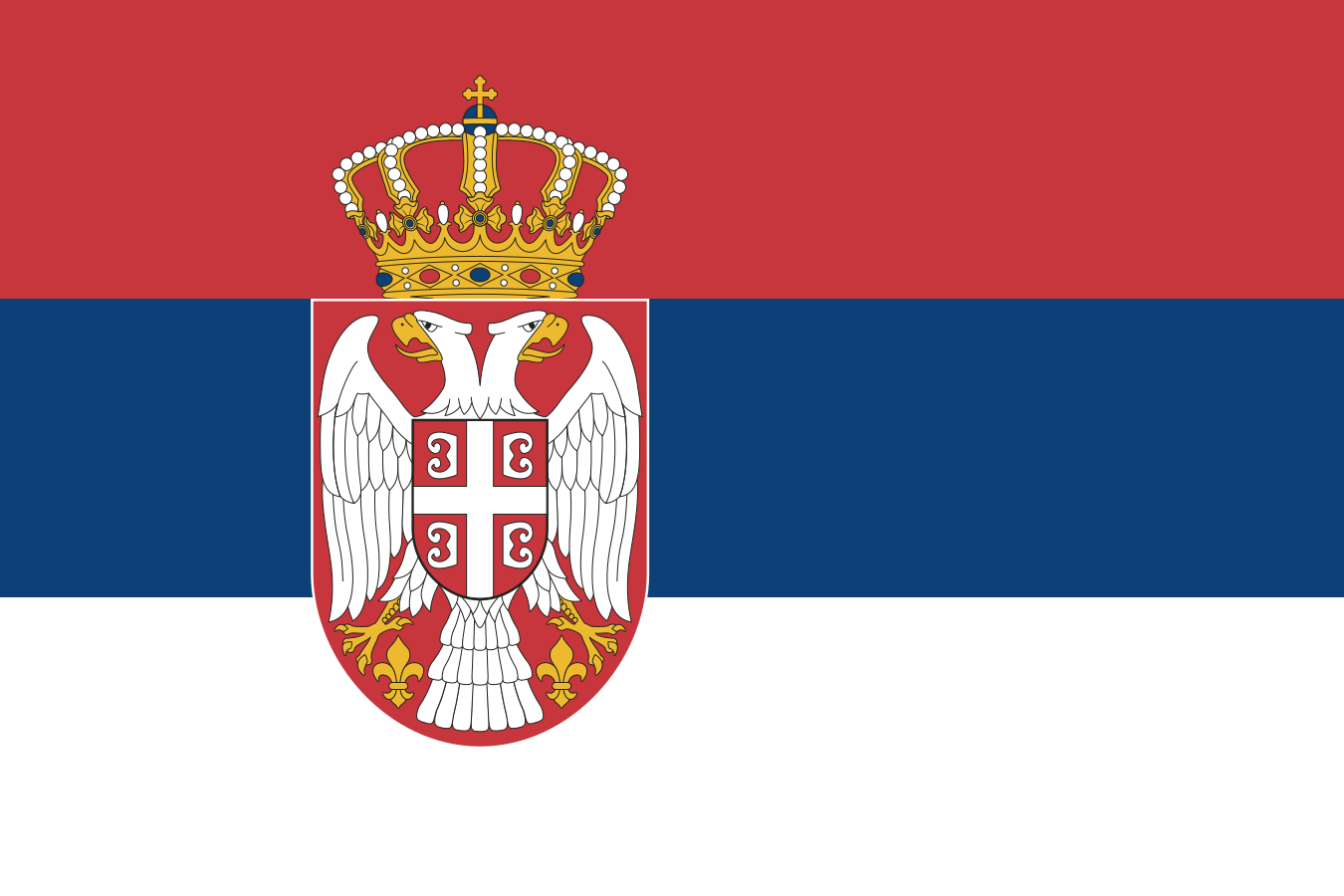
Serbia's adoption of daylight saving time in 1917 made it one of the first European countries to experiment with clock changes during World War I, initially to conserve coal for wartime efforts—a practice that continues today with the Europe/Belgrade zone. This early innovation highlights Belgrade's role as a timekeeping pioneer in the Balkans, where the city's historic astronomical clock in the Parliament building has tracked solar time since 1896.
Serbia, a landlocked nation in the heart of the Balkans with a population of around 7 million, offers a rich tapestry of history, culture, and natural beauty in Europe. Its capital, Belgrade, serves as the vibrant political and economic hub, blending Ottoman, Austro-Hungarian, and modern influences. When it comes to time in Serbia, the country operates on a single time zone, making it straightforward for travelers and businesses to coordinate with this ISO RS-coded destination.
Nestled in southeastern Europe, Serbia spans diverse landscapes from the Danube River plains to the rugged Dinaric Alps, drawing visitors year-round for its festivals, Orthodox heritage, and lively urban scenes. The nation's unified time zone simplifies planning, whether you're booking flights to Belgrade Nikola Tesla Airport or scheduling virtual meetings across continents. Understanding Serbia's time essentials ensures seamless connections in this crossroads of East and West.
Serbia adheres to Central European Time (CET), designated by the IANA time zone identifier Europe/Belgrade, with a standard UTC offset of +1 hour. This single time zone covers the entire country, including the capital Belgrade and major cities like Novi Sad and Niš, eliminating any regional variations that complicate travel in more fragmented nations. Belgrade, as the administrative and cultural center, exemplifies this uniformity—its iconic clocks in public squares, such as those in the historic Kalemegdan Fortress, tick reliably to Europe/Belgrade, helping locals and tourists alike stay synchronized.
Daylight saving time (DST) is observed in Serbia, aligning with most of Europe to extend evening daylight during warmer months. The switch to Central European Summer Time (CEST, UTC+2) occurs on the last Sunday in March, typically around 2:00 AM local time when clocks spring forward by one hour. The reverse happens on the last Sunday in October, with clocks falling back at 3:00 AM CEST to resume CET. This practice, reinstated in Serbia in 2006 after a brief hiatus, promotes energy efficiency and outdoor activities, though it can briefly disrupt sleep patterns for residents and visitors.
In terms of global coordination, Serbia maintains a consistent one-hour lead over London throughout the year. During winter (CET), when London is on Greenwich Mean Time (GMT, UTC+0), the difference is +1 hour—meaning 9:00 AM in Belgrade is 8:00 AM in London. Come summer, with both locations advancing their clocks (CEST vs. British Summer Time, BST UTC+1), the gap remains +1 hour; a 9:00 AM call from Belgrade lands at 8:00 AM in London. This stability contrasts with non-DST regions and aids frequent interactions between Serbia and the UK, from trade partnerships to family calls. For those in the US, the offset varies: Eastern Standard Time (EST, UTC-5) trails Serbia by six hours in winter, narrowing to five during US DST, while Pacific Time adds three more hours behind. Tools like world clocks or apps using the Europe/Belgrade identifier make real-time conversions effortless, essential for international business in Serbia's growing tech and automotive sectors.
Serbia's daily rhythm pulses with a Mediterranean-influenced pace, especially in urban centers like Belgrade, where work-life balance emphasizes family meals and social gatherings over rigid schedules. Breakfast, often a light affair of bread, cheese, and strong coffee (kafa), is typically enjoyed between 7:00 AM and 8:00 AM before the workday begins. Lunch, the main meal of the day, arrives late around 2:00 PM to 3:00 PM, featuring hearty dishes like ćevapi (grilled minced meat) or sarma (cabbage rolls), with many offices closing briefly for this communal break— a nod to Balkan traditions where food fosters bonds.
Standard office hours run from 8:00 AM to 4:00 PM, Monday through Friday, allowing for an early evening unwind, though government and administrative services may extend to 7:00 PM in larger cities. Shops and markets buzz from 9:00 AM until 9:00 PM or later, with smaller family-run stores in rural areas adapting to local needs; supermarkets like those in Belgrade's shopping districts often operate extended hours on weekends. Sundays serve as the primary day of rest, rooted in Orthodox Christian customs, when many businesses shutter early or close entirely, encouraging church visits or leisurely rakija (fruit brandy) sessions at home. Nightlife adds a dynamic twist, particularly in Belgrade's splavovi (floating river clubs) along the Sava, where evenings stretch into the early hours, reflecting Serbia's reputation for vibrant after-dark energy—festivals like the EXIT music event amplify this from June to September.
Seasonal sunlight shapes the rhythm further: on the summer solstice (around June 21), sunrise in Belgrade hits about 4:45 AM and sunset lingers past 8:30 PM, fueling outdoor kafanas (taverns) and barbecues. Winter solstice (December 21) brings shorter days, with sunrise around 7:00 AM and sunset by 4:00 PM, prompting earlier indoor gatherings and holiday preparations for Serbian Orthodox Christmas on January 7. These patterns, intertwined with public holidays like Vidovdan on June 28, create a culturally rich tempo that rewards visitors who sync with local flows rather than rushing through.