Praia
Cape Verde
--:--
Cape Verde 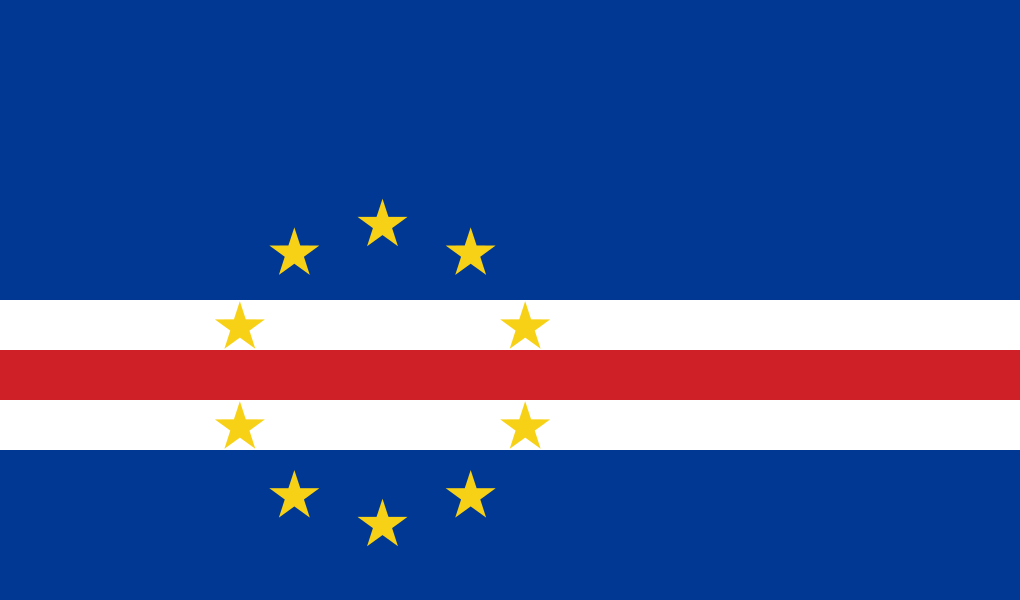
Cape Verde's adoption of UTC-1 in 1911 made it one of the first African territories to align with international maritime time standards, aiding transatlantic shipping routes that once fueled its economy as a key refueling stop. This enduring time zone has preserved the archipelago's reputation for punctual funaná festivals, where rhythms sync perfectly with the island's unchanging clock.
Nestled in the Atlantic Ocean off the coast of West Africa, Cape Verde is an archipelago nation known for its volcanic landscapes, vibrant Creole culture, and laid-back island vibe. With a population of around 560,000 and the bustling capital of Praia on Santiago Island, this Portuguese-speaking country operates on a single time zone that keeps its rhythm steady year-round. Whether you're planning a trip to explore its beaches or coordinating business across the islands, understanding the time in Cape Verde ensures seamless connections with this sun-soaked paradise.
Cape Verde maintains a straightforward approach to timekeeping, adhering to a single time zone identified by the IANA as Atlantic/Cape_Verde. This zone corresponds to a UTC offset of -1 hour, meaning clocks here are consistently one hour behind Coordinated Universal Time without any seasonal adjustments. In the capital, Praia, and across all ten islands—from the lush greens of Santo Antão to the arid dunes of Sal—residents and visitors follow this uniform Atlantic/Cape_Verde standard, simplifying travel logistics within the country and eliminating the confusion of multiple zones.
Unlike many European or North American destinations, Cape Verde does not observe daylight saving time (DST). There are no switchover dates or clock changes; the nation has remained firmly on standard time since abandoning DST in 1993. This decision aligns with its tropical climate, where daylight hours vary minimally throughout the year, making artificial time shifts unnecessary. For international travelers, this stability is a boon—your watch won't need resetting upon arrival, regardless of the season.
When comparing to London, the time difference highlights Cape Verde's position further west in the Atlantic. In winter, when London runs on Greenwich Mean Time (GMT, UTC+0), Cape Verde is one hour behind, so 9 a.m. in Praia is 10 a.m. in the UK capital. During summer, as London advances to British Summer Time (BST, UTC+1) from late March to late October, the gap widens to two hours—9 a.m. in Cape Verde becomes 11 a.m. in London. This consistent offset, without DST complications on the Cape Verde side, makes it easier for UK-based businesses or tourists to schedule calls or flights. For those from the ISO code CV region, syncing with global partners is straightforward, fostering stronger ties in tourism, music exports like morna, and renewable energy initiatives that define this resilient African nation.
Life in Cape Verde pulses to a relaxed, sun-drenched cadence influenced by its African roots, Portuguese heritage, and island isolation, where the ocean breeze often dictates the pace. Meals anchor the day with breakfast (pequeno-almoço) typically enjoyed early, around 7-8 a.m., featuring fresh coffee, bread, and tropical fruits like papaya or mango. Lunch, the main meal known as almoço, unfolds between 1 p.m. and 3 p.m., often a communal affair with grilled fish, cachupa stew (a hearty corn and bean dish), or rice-based plates savored slowly in family settings or beachside spots. Dinner (jantar) follows later, from 8 p.m. onward, lighter and social, sometimes extending into evening gatherings under starry skies.
Work and commerce adapt to this temperate flow, with offices and administrative buildings in Praia opening around 8 a.m. and closing by 5 p.m., though government services may pause for a mid-afternoon break from 12:30 p.m. to 2:30 p.m. Shops and markets buzz from 9 a.m. to 7 p.m., with smaller vendors on islands like Fogo or Maio wrapping up earlier to catch the sunset. Sundays serve as the primary day of rest, when many businesses shutter, and communities turn to church services or family outings, reflecting the strong Catholic traditions blended with animist influences. Nightlife adds a lively twist, especially in tourist hubs like Mindelo on São Vicente, where funaná music and coladeira dances keep bars open until midnight or later on weekends, embodying the cabo-zverdeanu spirit of joy amid adversity.
Seasonal daylight further shapes this rhythm; at the summer solstice in June, sunrise in Praia hovers around 6 a.m. and sunset near 7:15 p.m., providing about 13 hours of light for outdoor pursuits like hiking or whale-watching. In the winter solstice of December, days shorten to roughly 11 hours, with sunrise at 7 a.m. and sunset by 6:15 p.m., prompting earlier evenings and cozy indoor rituals. This predictable cycle supports Cape Verde's eco-tourism and fishing economy, where locals rise with the dawn for sustainable practices, ensuring the archipelago's harmonious blend of work, leisure, and cultural expression endures.