Jérusalem
Israel
--:--
Jerusalem 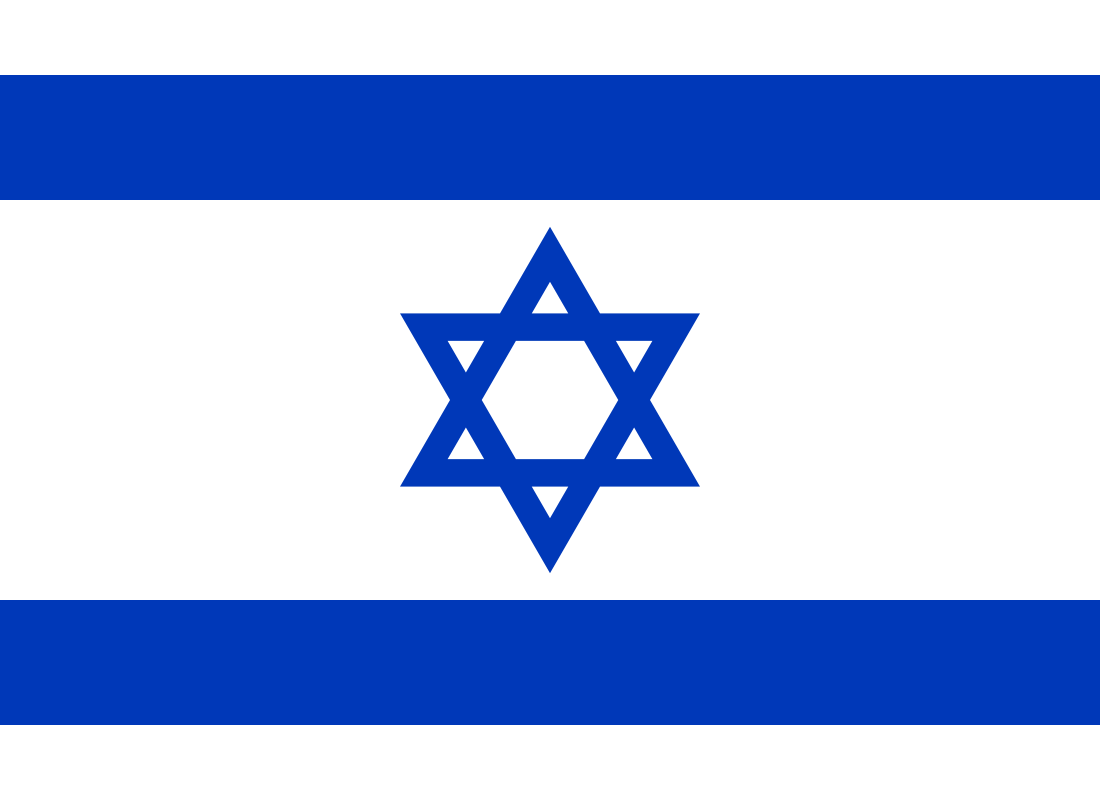
Israel's observance of Shabbat leads to a unique "time freeze" nationwide, where from Friday sunset to Saturday sunset, elevators in many buildings are programmed to stop on every floor to accommodate religious restrictions against pressing buttons. This tradition, rooted in Jewish law, affects urban life in cities like Jérusalem, turning routine commutes into a subtle communal ritual.
Israel, a vibrant nation in the Middle East with a population of approximately 9.5 million, serves as a crossroads of history, culture, and innovation. Its capital, Jérusalem, embodies the country's spiritual and political heart, drawing visitors from around the world. With just one time zone, Israel Standard Time (IST), the country operates on a unified clock, making it straightforward for travelers and businesses to coordinate schedules—typically UTC+2, shifting to UTC+3 during daylight saving time.
Israel adheres to a single time zone across its territory, designated as Asia/Tel_Aviv in the IANA time zone database. This corresponds to Israel Standard Time (IST) with a standard UTC offset of +2 hours, ensuring consistency from the bustling streets of Tel Aviv to the historic sites in Jérusalem. The capital, Jérusalem, follows this exact zone, so whether you're planning a visit to the Western Wall or coordinating a meeting in the government district, the local time remains synchronized nationwide.
Daylight saving time (DST) is observed in Israel, known locally as Israel Daylight Time (IDT), advancing clocks by one hour to UTC+3. The switchover typically occurs on the last Friday in March, when clocks spring forward at 2:00 a.m. local time, and reverts on the last Sunday in October, falling back at 2:00 a.m. This practice, reinstated in 2006 after a brief hiatus, aligns with energy-saving goals and extends evening daylight during the warmer months. Note that these dates can occasionally shift due to national holidays or legislative adjustments, so checking official sources like the Israel Ministry of Interior is advisable for precise annual confirmations.
When comparing to London, which operates on Greenwich Mean Time (GMT, UTC+0) in winter and British Summer Time (BST, UTC+1) in summer, Israel maintains a consistent +2-hour difference year-round. In winter, for instance, when it's 9:00 a.m. in London, it's 11:00 a.m. in Jérusalem; during summer DST periods, 9:00 a.m. BST in London still translates to 11:00 a.m. IDT in Israel. This steady offset simplifies planning for UK-based travelers or professionals, avoiding the disruptions common in regions with varying DST alignments. For those using the ISO code IL in digital tools or APIs, this time zone data integrates seamlessly for applications like scheduling software or global e-commerce platforms. Overall, Israel's time management reflects its efficient, forward-thinking society, where the single zone supports a dynamic economy spanning tech hubs in Haifa to cultural centers in the Negev Desert. Understanding these nuances ensures smooth connections, whether for business calls, flights, or virtual tours of iconic landmarks like the Dead Sea.
Daily life in Israel pulses with a blend of ancient traditions and modern efficiency, shaped by its Mediterranean climate and diverse cultural influences. Meals follow a structured yet flexible pattern: breakfast is often light and early, around 7:00–8:00 a.m., featuring fresh yogurt, cheeses, and salads in homes or cafes. Lunch, the main meal for many, typically occurs between 12:00 p.m. and 2:00 p.m., with hearty dishes like falafel, hummus, or shawarma enjoyed in communal settings—workplaces often provide subsidized cafeterias to accommodate this midday ritual. Dinner winds down the day later, from 7:00 p.m. to 9:00 p.m., emphasizing family gatherings with grilled meats, vegetables, and wines, especially on weekends.
Office hours generally run from 8:00 a.m. to 5:00 p.m. or 9:00 a.m. to 6:00 p.m., Monday through Friday, though high-tech sectors in Tel Aviv may extend into evenings for global collaboration. Shops and markets buzz from 9:00 a.m. to 8:00 p.m. or later, with malls like Dizengoff Center open until 10:00 p.m.; administrative offices, such as those in Jérusalem's government buildings, stick to 8:00 a.m.–3:00 p.m. weekdays. A key local specificity is the weekly rest day, Shabbat, beginning at sunset Friday and ending at sunset Saturday—public transport halts, many businesses close, and the focus shifts to religious observances, family meals, and quiet reflection, fostering a profound communal pause. This rhythm underscores Israel's Jewish heritage, where time feels sacred, yet post-Shabbat evenings ignite with vibrant nightlife, particularly in Tel Aviv's beachfront bars and clubs that thrum until dawn.
Sunrise and sunset times vary seasonally, adding to the daily cadence; at the summer solstice in June, dawn breaks around 5:30 a.m. in Jérusalem, with sunset near 7:50 p.m., allowing extended outdoor activities. In winter's December solstice, sunrise delays to about 6:40 a.m., and dusk falls by 4:30 p.m., prompting earlier indoor pursuits. These natural markers influence everything from agricultural cycles in the Galilee to evening prayers at the Kotel. For visitors, syncing with this rhythm—perhaps joining a Friday night dinner or exploring markets on Sunday—enhances the experience of Israel's lively, resilient spirit.