Beyrouth
Lebanon
--:--
Beirut 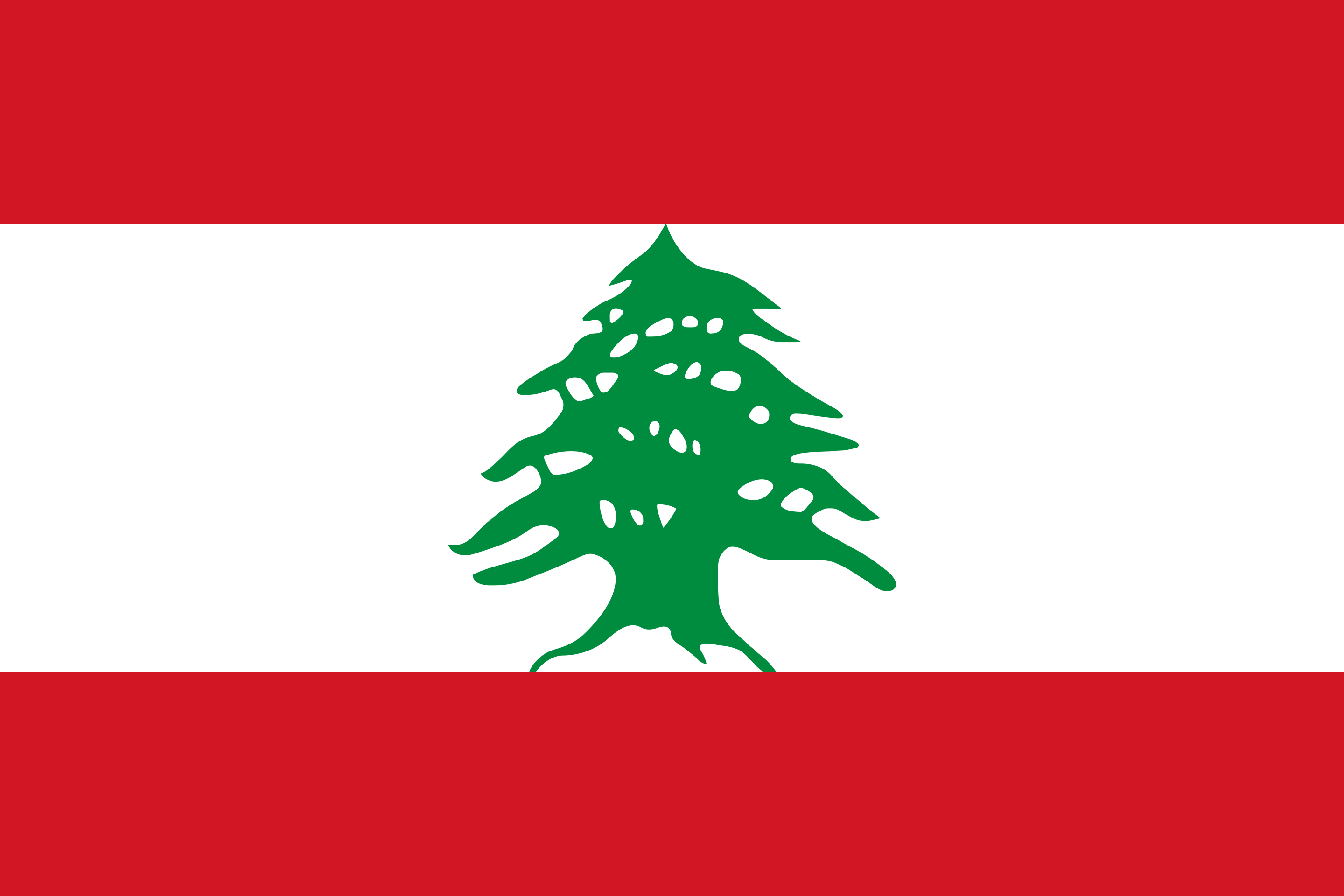
Lebanon briefly suspended daylight saving time in 2020–2021 due to economic challenges and fuel shortages, leading to a rare instance where the country aligned exactly with Egypt's time zone during that period. This temporary shift highlighted how local crises can disrupt even longstanding temporal traditions in the region.
Lebanon, a vibrant nation in the Middle East with a population of approximately 5.3 million, is renowned for its rich history, stunning Mediterranean coastline, and cultural diversity. The country's capital, Beyrouth, serves as the bustling heart of economic and social life. Lebanon operates within a single time zone, Asia/Beirut, which aligns the entire country under a unified clock for seamless daily operations and international connectivity.
Lebanon's sole time zone is Asia/Beirut, following Eastern European Time (EET) with a standard UTC offset of +2 hours. This zone encompasses the entire country, including the capital Beyrouth, ensuring consistent timing from the northern mountains to the southern borders. During winter months, clocks remain on UTC+2, providing a stable reference for residents and visitors alike.
Daylight saving time (DST) is observed in Lebanon, shifting the clock forward by one hour to Eastern European Summer Time (EEST) at UTC+3. The switch occurs on the last Sunday of March, typically around 2:00 AM local time, when clocks advance to 3:00 AM. The return to standard time happens on the last Sunday of October, with clocks falling back from 3:00 AM to 2:00 AM. This practice, reinstated in recent years after temporary suspensions due to regional instability, aims to maximize evening daylight during warmer months and conserve energy.
Regarding time differences with London, Lebanon maintains a consistent +2-hour lead year-round. In winter, when London is on Greenwich Mean Time (GMT, UTC+0), Lebanon at UTC+2 is two hours ahead. During summer, as London shifts to British Summer Time (BST, UTC+1), Lebanon on UTC+3 remains two hours ahead. This alignment simplifies scheduling for business and travel between the two regions, avoiding the seasonal variations seen in other global pairings. For travelers from the UK, planning flights or calls becomes straightforward, with no need to adjust for changing offsets. Lebanon's ISO code LB further standardizes its temporal identity in international systems, facilitating global coordination in aviation, finance, and telecommunications. Overall, the Asia/Beirut zone's predictability supports Lebanon's role as a key Middle Eastern hub, blending ancient heritage with modern efficiency.
Lebanon's daily rhythm reflects its Mediterranean lifestyle, blending Levantine traditions with urban energy, particularly in Beyrouth. Breakfast is typically light and early, around 7:00–8:00 AM, featuring fresh labneh, olives, and manakish flatbread, often enjoyed at home or quick café stops before the workday begins. Lunch, the main meal, occurs between 1:00 PM and 3:00 PM, with families and colleagues gathering for hearty dishes like kibbeh or grilled meats, sometimes extending into a social siesta in rural areas.
Office hours generally run from 8:00 AM or 9:00 AM to 5:00 PM, Monday through Friday, though many businesses in Beyrouth adopt flexible schedules influenced by traffic and family needs. Government and administrative offices, such as those in the capital, open around 8:00 AM and close by 3:00 PM or 4:00 PM, with reduced hours on Thursdays to prepare for the weekend. Shops and markets buzz from 9:00 AM to 7:00 PM or later, especially in souks like Bourj Hammoud, where bargaining and haggling add to the lively pace. The official weekend is Saturday and Sunday, with most institutions closed, allowing time for family outings, beach visits, or religious observances—Lebanon’s diverse population includes significant Christian and Muslim communities, so Friday prayers may influence some schedules in Muslim-majority areas.
Evenings come alive with Lebanon's famed nightlife, particularly in Beyrouth's Hamra or Gemmayzeh districts, where restaurants serve dinner as late as 10:00 PM or midnight, followed by clubs pulsing until dawn. This nocturnal vibrancy stems from the country's resilient spirit, with rooftop bars and live music venues drawing crowds year-round. Rituals like the evening mezze gatherings foster social bonds, often stretching into the night. For seasonal context, sunrise in Beyrouth varies from about 5:30 AM at the summer solstice to 7:00 AM at winter solstice, while sunset shifts from 8:00 PM in June to around 5:00 PM in December, influencing outdoor activities and the transition to evening leisure. This rhythm underscores Lebanon's balance of productivity and pleasure, making it a dynamic destination for those attuned to its temporal flow.