Windhoek
Namibia
--:--
Windhoek 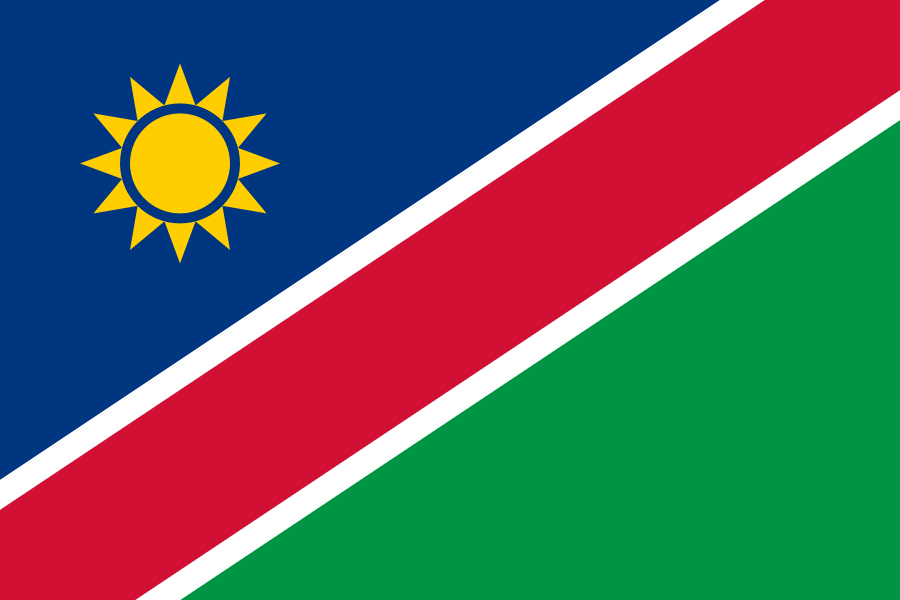
Namibia's fixed UTC+2 time zone played a key role in its 2019 solar eclipse event, where precise timing allowed astronomers in Windhoek to capture the total eclipse at exactly 8:24 AM local time, drawing global stargazers without DST-related scheduling hiccups. This alignment highlighted the country's stable temporal framework, supporting uninterrupted scientific observations in its clear desert skies.
Nestled in southwestern Africa, Namibia captivates with its vast deserts, wildlife reserves, and rich cultural heritage. As a nation of approximately 2.5 million people, it spans diverse landscapes from the Namib Desert to the Etosha National Park, with Windhoek serving as its bustling capital. Namibia operates on a single time zone, Central Africa Time (CAT), which keeps the country's rhythm synchronized across its expansive territory, making it straightforward for travelers and businesses to coordinate schedules.
Namibia adheres to a single time zone throughout the country, identified by the IANA time zone database as Africa/Windhoek. This zone corresponds to UTC+2, providing a consistent offset that aligns with much of southern and central Africa. The capital, Windhoek, and all major cities like Swakopmund and Rundu follow this standard, eliminating the need for time conversions within Namibia itself. Whether you're planning a safari in the north or exploring coastal dunes in the west, the unified Africa/Windhoek zone ensures seamless timing for appointments and events.
Namibia does not observe daylight saving time (DST), a policy in place since the country's independence in 1990. This means there are no seasonal clock changes, offering predictability for residents and visitors alike. Clocks remain fixed at UTC+2 year-round, avoiding the disruptions common in DST-observing regions. For international coordination, this stability is a boon—business hours and flight schedules don't shift unexpectedly.
When comparing to London, Namibia is typically two hours ahead during the UK's winter months (from late October to late March, when London is on Greenwich Mean Time, UTC+0). In the UK's summer (late March to late October, on British Summer Time, UTC+1), the difference narrows to just one hour ahead. This makes early morning calls from London feasible during Namibian business hours, fostering strong ties in trade and tourism between the regions. For those querying the current time in Namibia, it's always best to check a reliable world clock, as the fixed UTC+2 offset simplifies real-time conversions without DST complications.
Life in Namibia pulses with a blend of modern efficiency and traditional influences, shaped by its arid climate and multicultural fabric. Typical meal times reflect a practical approach: breakfast is often light and early, around 7-8 AM, featuring porridge or bread with coffee before the day's heat intensifies. Lunch, the main meal, occurs between 12 PM and 2 PM, commonly including staples like braai (barbecued meats), maize porridge (pap), and fresh salads—often enjoyed at home or work canteens. Dinner is later, from 7 PM onward, with families gathering for hearty dishes amid the cooling evening air, sometimes extending into social chats under starry skies.
Office and administrative hours generally run from 8 AM to 5 PM, Monday through Friday, with a one-hour lunch break. Government offices in Windhoek, such as those handling visas or permits, open at 8 AM and close by 4:30 PM, though some extend to 6 PM during peak tourist seasons. Shops and markets follow suit, typically 9 AM to 6 PM, with larger supermarkets in urban areas staying open later, until 8 PM or on weekends. In rural areas, rhythms tie closer to daylight and livestock needs, so smaller vendors might wrap up by late afternoon.
Local specifics add flavor to the daily flow. The weekly rest day is Sunday, when many businesses close, and communities observe a quieter pace—churches fill with hymns, and families picnic in parks. Nightlife in Windhoek thrives modestly, with bars and live music venues like the Stellenbosch Wine Festival grounds buzzing from 9 PM until midnight on weekends, though it's more subdued than in larger African capitals. Rituals like the annual Windhoek Carnival in April infuse the calendar with festive energy, blending German colonial influences with indigenous Herero and Ovambo traditions. Sunrise and sunset times vary seasonally; at the June solstice, the sun rises around 7:20 AM and sets by 6 PM in Windhoek, while December's solstice brings earlier sunrises near 5:30 AM and sunsets after 7:30 PM, influencing outdoor activities like game drives that align with cooler dawn and dusk hours. This rhythmic balance underscores Namibia's appeal as a destination where time feels unhurried yet purposeful.